
Drying and pressing without losing the shape
Drying is where most shape gets lost. Heat, hanging weight and slow drying in a damp room do more harm than the wash itself. These are the usual fixes, worked through shelf by shelf.
Drying without a tumble dryer
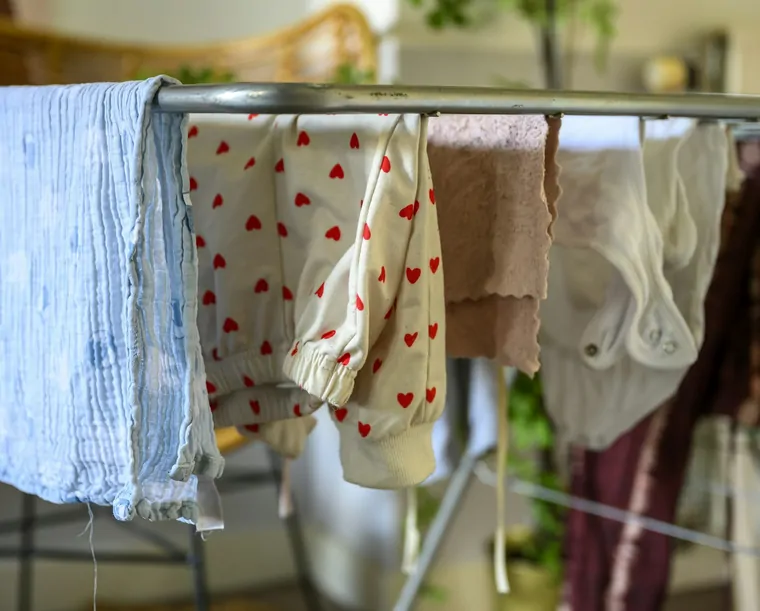
Most of the catalogue dries better in air than in a machine. An airer near an open window, or a line outdoors in the shade, keeps prints, elastic and colour in better condition, and costs nothing to run.
Hang very wet tees and hoodies over a rail or from the hem rather than by the shoulders, so the weight does not drag the neckline. Peg trousers at the waistband or hem, not halfway down the leg. Keep dark and bright pieces out of strong sun; shade dries them perfectly well.
Leave gaps between things on an airer. Clothes pressed together dry slowly and can turn musty. Turn heavy pieces such as jeans and sweatshirts halfway through.
Flat drying for knits
Knitwear should dry flat. A wet jumper on a hanger or a line stretches under its own weight and ends up longer and narrower. Lay it on a clean, pale towel on a flat surface or a mesh rack, ease it back to its shape and size with your hands, and smooth out any folds.
Turn it over after a few hours. Keep it away from radiators and strong sun, because the part nearest the heat dries first and can change colour.
Scarves and wool caps follow the same rule. A long scarf can lie in a loose S; a cap dries over a rolled towel or a bowl.
Drying indoors in a damp flat
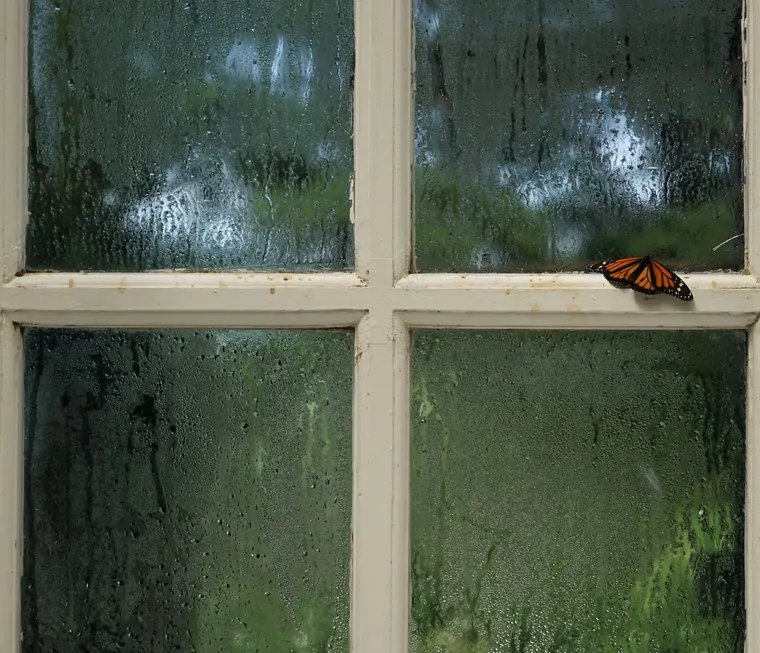
Drying laundry indoors puts moisture into the air, and in a home without much ventilation it ends up as condensation on windows and walls. UK government guidance on damp and mould counts drying laundry among the everyday activities that add moisture, and suggests drying outdoors where possible, opening windows and running extractor fans.
Dry laundry where moisture can leave the room safely, following the home’s ventilation guidance. Avoid trapping damp air in a closed room. Use the garment’s permitted spin and drying method, leave space between items and keep textiles away from direct heat. A dehumidifier can help remove moisture where appropriate, but it does not override a flat-dry or no-heat instruction.
Do not put clothes away damp. Anything that still feels cool against the back of your hand is still wet; give it longer.
Steam before the iron
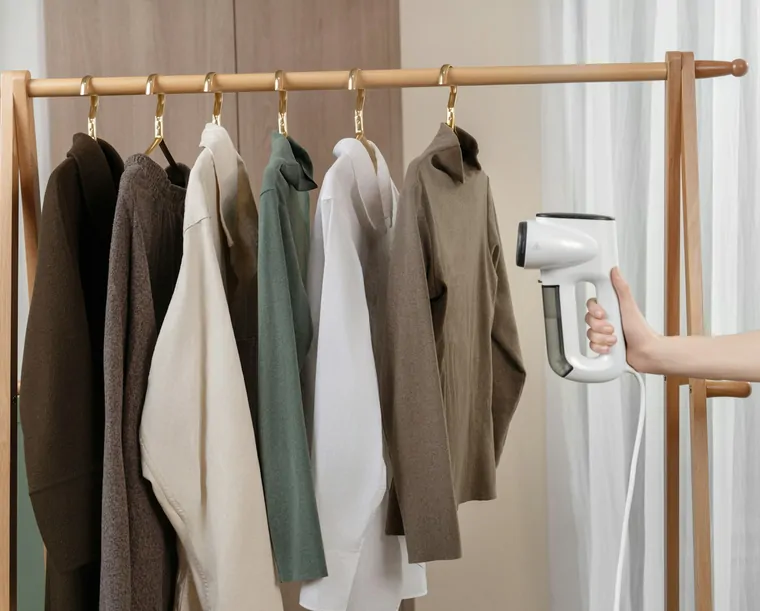
Steam lifts most packing creases and light wrinkles without anything touching the fabric. A handheld steamer held a few centimetres from the garment, moved slowly from top to bottom while you tug gently at the hem, deals with most shirts and trousers in a couple of minutes.
Without a steamer, hang the garment in the bathroom while you shower, out of the spray, for a quarter of an hour or so, then smooth it by hand and let it hang to dry. It works well on light and mid-weight fabrics and less well on heavy cotton.
Steam is also the safest first step for printed pieces and anything coated, because nothing hot is pressed onto the surface.
Irons, prints and wool settings
Use the lowest setting that works and the label allows. Iron prints from the reverse or with a cloth between the iron and the design, and never slide the iron across a print. Raised rubber designs and heat transfers are usually best not ironed at all.
Knitwear seldom needs an iron. If it does, choose the wool or medium setting with steam, press lightly rather than pushing, and leave the piece flat for a few minutes before folding it. Heavy pressure leaves a shine.
Synthetics, coated jackets and faux leather can melt or mark. Skip the iron, or use the lowest setting on the reverse with a cloth in between.
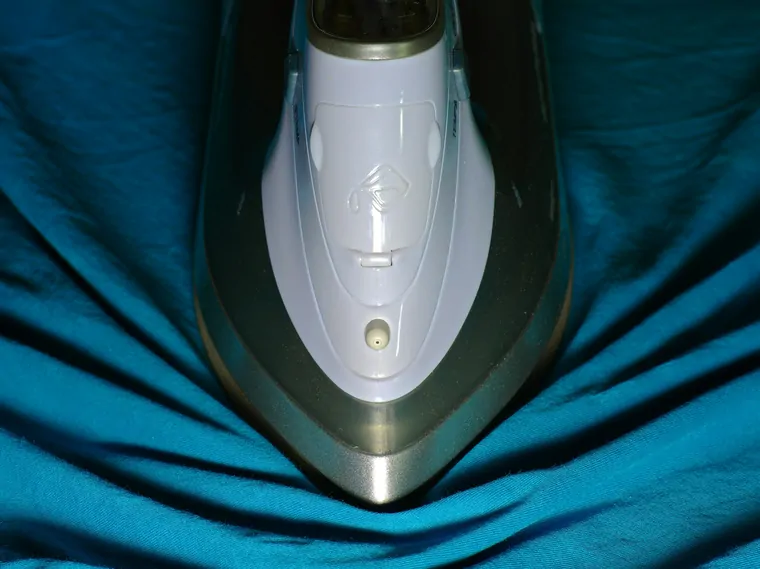
Caps and shaped pieces drying on a form
Anything with built-in shape, such as a cap, a structured bag or a padded collar, should dry on a form that matches it. An upturned bowl, a rolled towel or a balled-up T-shirt under a cap's crown keeps the front panel curved while it dries.
Keep caps out of the tumble dryer; the heat can warp the brim and distort the band. Older caps with card inside the brim should not be soaked at all, only spot cleaned.
A bag that got wet should be stuffed with paper or a towel and left upright to dry slowly, away from any heater.