
Storing catalogue finds between wears and seasons
Storage is care you do once and then forget, which is why it is worth doing properly. Clean, dry, supported and able to breathe: those four conditions cover most of the catalogue.
Storing knitwear, caps and stiff-sided bags
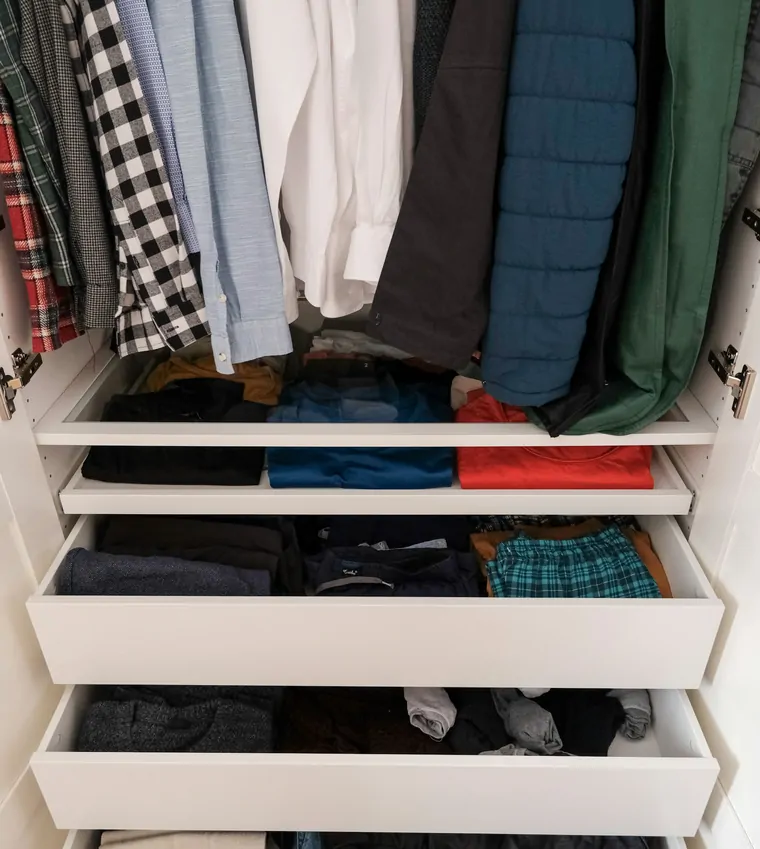
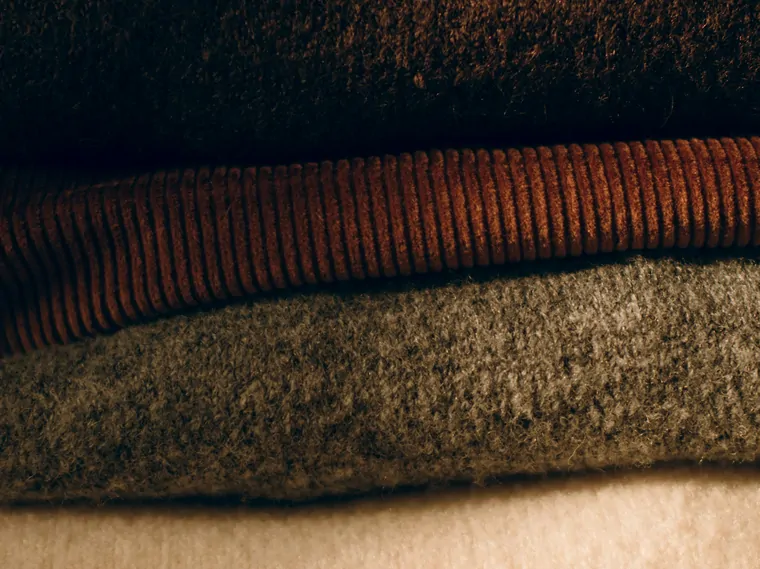
Knitwear belongs in a drawer or on a shelf, folded. Fold the sleeves across the back, then fold the body in half or in thirds, and keep the heaviest pieces at the bottom of the pile. Hangers stretch the shoulders and pull a knit longer over the months.
Caps hold their shape when stacked with the crowns nested inside one another, or set crown-up on a shelf. Keep them out from under heavier things in a drawer.
Structured bags want stuffing with acid-free tissue or clean paper, an upright spot, and a breathable cotton cover rather than plastic. A bag left hanging by its handle for months can stretch it.

Folding versus hanging, shelf by shelf
- FoldKnitwear, T-shirts, sweatshirts and hoodies, joggers, scarves.
- HangShirts, tailored trousers, jackets, padded coats on a wide hanger, dresses.
- EitherJeans folded or hung by the belt loops, and shorts.
- Stack or standCaps, bags and shoes.
Wide or shaped hangers keep the line of a coat's shoulders; thin wire hangers leave dents. Hang trousers by the hem with clip hangers, or fold them over a padded bar.
If hanging space is short, the pieces that must hang come first: anything tailored, anything that creases badly, and coats. Everything soft can be folded without harm.
Moths, cedar and checking in
Clothes moths are drawn to wool and other animal fibres, especially pieces put away unwashed and left undisturbed in the dark. Wash or clean anything before it goes away for a season; body oils and food marks attract them.
Cedar blocks or hangers and lavender sachets are common deterrents, but none is a guarantee. The habit that helps most is checking in: take stored things out every few weeks, shake them, look for small holes or fine silky webbing, and air the drawer.
Keep cedar away from leather, which it can dry out; lavender is the gentler choice there.
Sealed storage bags for summer layers, not for down
Airtight storage bags save a great deal of room for off-season tees, shorts and sweatshirts. Their weak points: no air gets in, so any dampness stays trapped, and they are hard on delicate clothes. A sachet of silica gel inside helps, and so does making sure everything is completely dry before it goes in.
Padded coats and knits are better off in breathable cotton bags or loose on a shelf. Down kept compressed for months is slow to recover and may not come all the way back, so store coats hanging loosely or laid flat on top of a wardrobe.

Small wardrobes and under-bed space
A small wardrobe is a sorting problem more than a storage problem. Keep only the current season in it; everything else goes into under-bed boxes or onto high shelves, clean and dry.
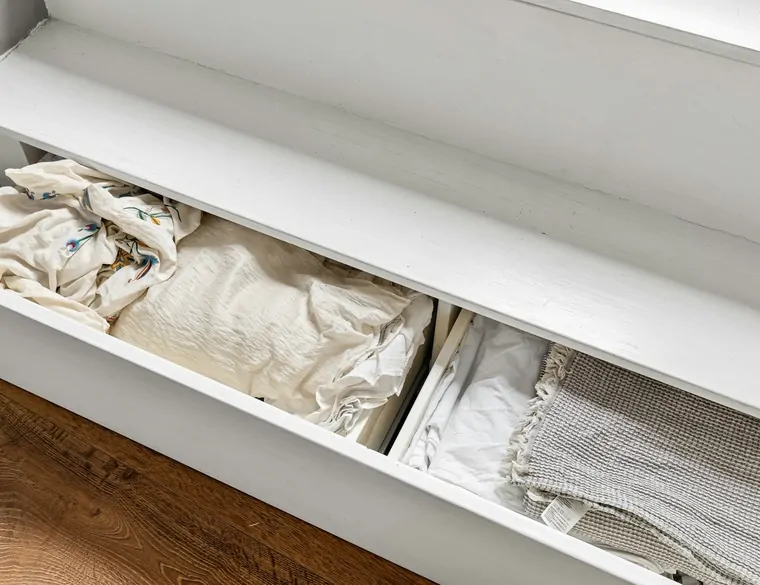
Under-bed drawers suit folded knits and tees. Line them with a clean cotton sheet and lift the lid now and then to let air in. Save the hanging space for what has to hang (coats, shirts, trousers) and fold the rest.
Hooks on the back of a door are fine for the coat you wear every day, but not for a knit or a wet jacket.
Damp rooms and breathable covers
A wardrobe against an outside wall in a damp flat can grow mould on the clothes inside it. Leave a gap between furniture and the wall, open the wardrobe door now and then, and put silica gel or a moisture absorber inside.
Use cotton garment covers rather than plastic dry-cleaning bags; plastic holds moisture against fabric and leather. If a wardrobe starts to smell musty, check leather and suede first, since they tend to show trouble early.